
For generations of Rhode Islanders, Rocky Point Park was not just an amusement park. It was the coast, the soundtrack of summer, and the definitive taste of a clam cake dipped in chowder.
It was a Warwick Neck waterfront landmark that defined our collective youth and anchored the culture of Rhode Island for over 150 years.
Now, decades after the rides went silent, we must move past simple nostalgia. The Warwick Current offers the definitive, critical assessment of Rocky Point’s enduring legacy and complex park history.
This is the Ultimate Review. We are measuring its overall performance, balancing the pain of the park closure against the success of its public reclamation.
To truly understand this icon, we must evaluate its legacy across four critical dimensions. Our assessment will establish a definitive Legacy Score based on:
- Historical Significance: Measuring its impact during the Golden Era (1880 to 1980) when the Shore Dinner Hall was in its prime.
- Emotional Resonance: Assessing the depth of collective memory and cultural importance to the community.
- Infrastructural Success and Failure: Analyzing the economic factors, including the role of entities like the Bank of New England, that led to its downfall.
- Current Utility: Critically assessing the success of its transition into a modern public shore park under the DEM cleanup.
We begin our journey at the pinnacle of its success, when Rocky Point stood shoulder-to-shoulder with regional titans, defining the seaside amusement experience.
Setting the Scorecard: The Ultimate Review Criteria
Rocky Point Park was not merely an amusement park. It was a 150-year institution, a centerpiece of Warwick Neck, and a defining Rhode Island waterfront landmark.
To truly measure the impact of such a legend, we must move beyond simple nostalgia. This is a critical assessment of the park’s historical performance, evaluating its success and failure across four core criteria.
We are applying a definitive scorecard to determine Rocky Point’s overall contribution to our community.
The Four Pillars of Legacy Assessment
Our review assesses the park across its entire lifespan, from the Golden Era (1880) through the ultimate transition to a State park:
1. Historical Significance & Emotional Resonance: This measures the sheer collective memory and cultural impact. How deeply did Rocky Point Park permeate the identity of Warwick and the wider region? This score reflects the enduring power of the Shore Dinner Hall, the thrill of the rides, and the memory of summer nights spent at The Palladium.
2. Infrastructural Success: This reviews the operational realities of the business. How well did the management (including key players like C.R. Amusements, Inc.) maintain the sprawling property? This criterion judges the park’s ability to handle maintenance, weather events, and the escalating costs that ultimately plagued it, unlike more stable regional competitors such as Lake Compounce or Canobie Lake.
3. Economic Performance & Financial Stability: This is a sober analysis of the bottom line. Despite high attendance, the park struggled with financial difficulties, high interest debt, and ownership changes involving institutions like the Bank of New England and Fairway Capital. This pillar assesses whether the commercial model was sustainable against rising real estate pressures.
4. Current Utility as a Public Space: We review the success of the property’s resurrection. Following the final park closure, the land’s transition to Rocky Point State Park, spearheaded by the Department of Environmental Management (DEM cleanup), was a massive civic undertaking. Does the current public access justify the pain of losing the original amusement park?
Key Takeaways: Rocky Point’s Enduring Legacy
- The park’s closure was driven primarily by overwhelming financial difficulties and high interest debt owed to lenders like the Bank of New England.
- The legendary Shore Dinner Hall was the park’s central economic engine, ensuring viability long after the amusement rides began to age.
- The transition to Rocky Point State Park, following intensive DEM cleanup efforts, successfully restored public access to the critical Warwick Neck waterfront.
- Infrastructural challenges, including hurricane damage and rising maintenance costs, provided a steep hurdle that competitors like Canobie Lake managed to avoid.
With these criteria set, we begin Phase I: assessing the Golden Era when Rocky Point Park was the undisputed king of Rhode Island entertainment.
Phase I: The Golden Era (1880 to 1980)
Rocky Point’s first century was not merely an era of operation; it was the foundation of a Rhode Island institution. Though the first picnic grounds opened in 1847, the true Golden Era, defined by massive crowds and cultural dominance, spanned the hundred years leading up to the 1980s.
This success was built upon tradition, family ownership, and the unique appeal of a coastal amusement park. During this period, annual attendance figures regularly exceeded one million visitors, cementing Rocky Point Park as the premier waterfront landmark in Rhode Island.
The park’s longevity was fueled by steamships bringing patrons from Providence and surrounding states, establishing Warwick Neck as the destination for summer fun.
The Commercial Core: Shore Dinner Hall
You cannot discuss the park history without starting at the table. The Shore Dinner Hall was the commercial engine room of Rocky Point Park.
It was not merely a restaurant; it was a pilgrimage site known worldwide for its massive capacity. At its peak, the Hall could serve thousands of diners simultaneously, cementing its reputation as the world’s largest of its kind.
This institution served millions of classic New England shore dinners: clam chowder, clam cakes, lobster, and watermelon.
The revenue generated by the Shore Dinner Hall provided the financial foundation for the entire property, stabilizing operations and keeping the lights on for the amusement rides, even during slower economic periods.
Rides and Resonance
Rocky Point was never trying to be Disney World. It was our authentic, local escape, comparable to beloved regional parks like Canobie Lake or Lake Compounce, offering pure, unpretentious thrills.
We remember the dizzying heights of the Skyliner, the refreshing plunge of the Flume, and the classic Ferris wheel that offered unparalleled views of Narragansett Bay.
These classic attractions required careful maintenance but minimal capital investment compared to the massive theme parks that began dominating the industry later in the century.
The park’s cultural reach extended far beyond the midway. The Palladium hosted world-class musicians, transforming the property into a major regional entertainment hub and further cementing the park’s role as an essential part of Rhode Island culture.
This Golden Era established Rocky Point Park as an irreplaceable fixture in the Warwick community, setting the stage for the challenges that would eventually follow.
Phase II: The Decline and Closure (1980 to 2003)
The transition from the Golden Era to the final, painful years of Rocky Point Park was swift and brutal. While we hold onto the romance of the Flume and the Shore Dinner Hall, the park’s ultimate demise was a stark lesson in regional economics.
The final two decades of Rocky Point’s commercial life were defined not by a lack of visitors, but by mounting financial pressures and shifting market dynamics. This was not a slow, painful death due to lack of attendance, but a sharp, sudden crisis driven almost entirely by crippling debt.
Attendance figures remained respectable throughout the 1980s and early 1990s. However, the cost of maintaining aging, large-scale infrastructure and competing with modernized regional amusement parks like Canobie Lake and Lake Compounce took an unsustainable toll.
The Crisis of Debt and Infrastructure
The true story of the Rocky Point Park closure in 1996 is rooted in finance, not a failure to entertain the people of Rhode Island. It is a sobering detail often overlooked: the park was fundamentally over-leveraged.
Under operators such as Captain Rocky, Inc. and later C.R. Amusements, Inc., the park took on significant operational and modernization debt throughout the 1980s and early 1990s.
The critical turning point came when the park relied on high-interest loans to keep operations afloat. This debt was secured by the immense value of the Warwick Neck land itself.
A major blow occurred when the primary lender, the troubled Bank of New England, called the Rocky Point note. This move forced the park into a desperate search for alternative financing, even though the loan was reportedly not yet in default.
The subsequent high-interest financing obtained from groups like Fairway Capital proved crippling. The financial requirements, which included escrowing $50,000 per week during the operating season, made the business model unsustainable.
The economic reality was harsh. Rocky Point was carrying a high-interest burden that no regional amusement park could sustain, especially while trying to modernize against the rise of national theme park competitors.
The park closed permanently after the 1995 season. The subsequent 1996 auction saw the scattering of its iconic rides across the country, marking the definitive park closure.
The Ghost Years and the Battle for the Waterfront
Following the 1996 closure, the expansive Warwick Neck property sat abandoned for years. It transformed into a ghostly testament to lost summers, attracting trespassers and decay.
The remaining iconic structures, including the historic Shore Dinner Hall and the entertainment venue known as The Palladium, suffered rapid deterioration. Major fires, suspected to be arson, consumed these irreplaceable buildings in the early 2000s, erasing physical evidence of the park’s glory.
During these ‘ghost years,’ the political future of the waterfront landmark became the central civic debate in Warwick. Real estate developers saw the site as prime territory for high-end luxury condominiums.
The community, however, galvanized. Advocates demanded that the land be reclaimed for public use, ensuring permanent access to the Narragansett Bay shoreline. This intense civic pressure laid the foundation for the eventual intervention and cleanup led by the Department of Environmental Management (DEM), setting the stage for Phase III: The Resurrection.
Phase III: The Resurrection (2003 to Present)
The transition from the Golden Era to the final, painful years of Rocky Point Park was swift and brutal. But the story of this quintessential Rhode Island amusement park is unique because the loss was not permanent.
After decades of uncertainty and the threat of high-end residential development on the Warwick Neck waterfront, the community rallied.
The fight for guaranteed public access eventually culminated in a stunning civic victory: the creation of Rocky Point State Park.
The State of Rhode Island, through the Department of Environmental Management (DEM), secured the purchase of the core 83-acre property for $9.65 million in 2013, ensuring this irreplaceable waterfront landmark would remain open to all.
The Great Cleanup: Trading Ruins for Reclamation
The transformation under the DEM was massive and often painful for those who cherished the ruins. The DEM cleanup removed nearly all traces of the defunct amusement park, including hazardous materials, unstable ride foundations, and debris from structures like the old The Palladium.
While this demolition was essential to convert a commercial disaster zone into a safe public space, it meant sacrificing the visible, tangible park history many hoped would be preserved.
What remains today is 124 acres of stunning, accessible coastal parkland. This transition from a debt-laden commercial venture to a lasting civic asset is Rocky Point’s most important modern chapter.
We now have guaranteed, permanent access to the Narragansett Bay shoreline, a precious resource that would otherwise have been locked behind private development.
Rocky Point Today: Civic Value vs. Commercial Nostalgia
How does the current state park compare to the commercial park of the past? The civic value is undeniable. Rocky Point State Park serves as a vital recreational hub for Warwick and all of Rhode Island.
We use the area daily for walking, fishing, jogging, and simply enjoying the view where the Flume once stood.
However, the emotional resonance of the site has necessarily changed. It is quieter, cleaner, and undeniably beautiful, but the kinetic energy of the amusement park is gone. You are trading the thrill of The Corkscrew for the serenity of the Bay breeze.
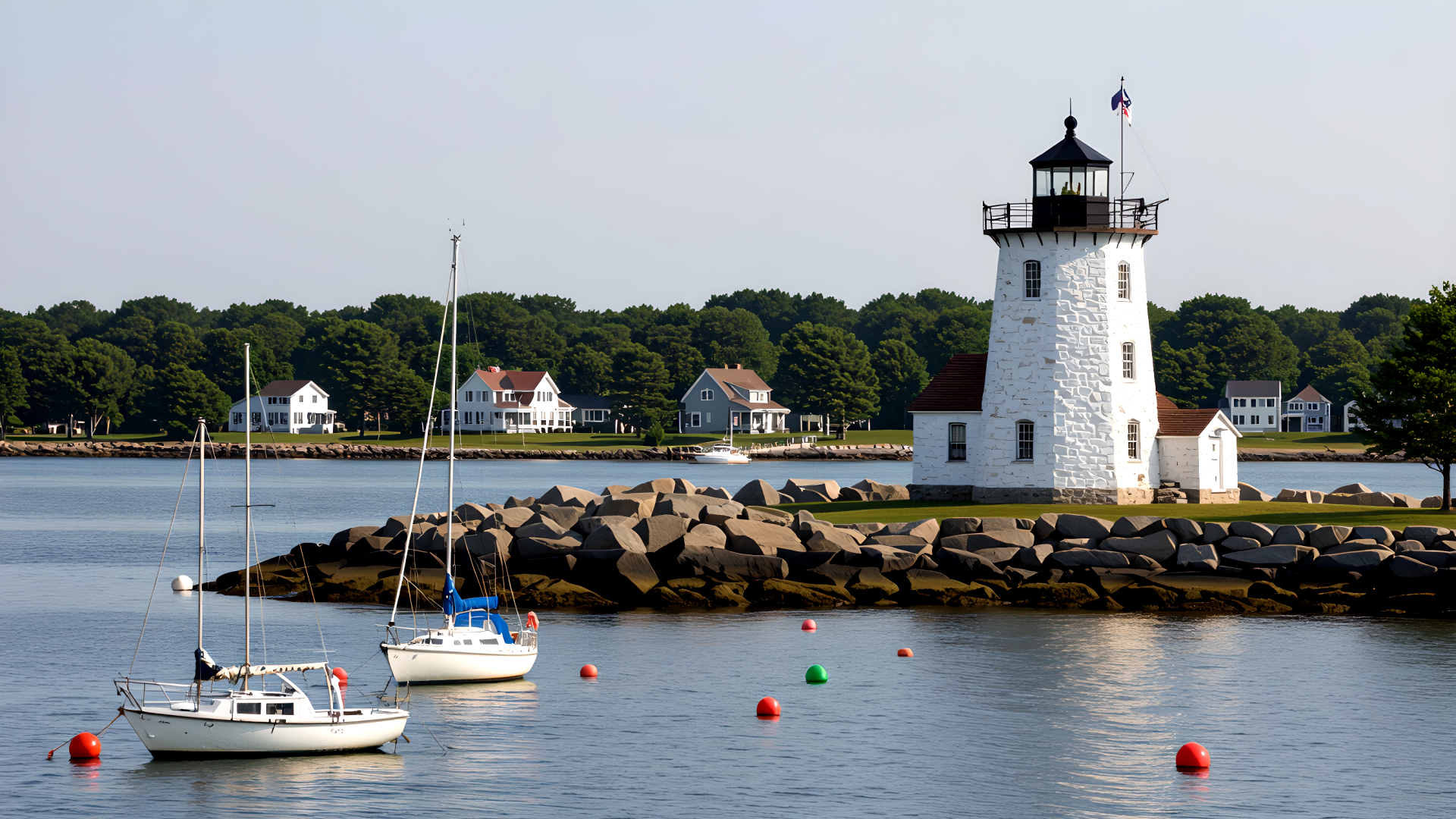
The primary remnants preserved, markers of the park’s history, are the arch from the 1964 World’s Fair, the foundation outline of the legendary Shore Dinner Hall, and, crucially, the iconic, unobstructed bay views.
Rocky Point: Commercial vs. Civic Value Comparison
The table below summarizes the trade-offs inherent in the transition from amusement park to state park, marking the final shift in the park’s history.
| Characteristic | Golden Era (Commercial Park) | Current Era (State Park) |
|---|---|---|
| Primary Function | Amusement, Entertainment, Dining | Recreation, Conservation, Public Access |
| Economic Impact | High employment, tourism revenue | Low maintenance cost, high civic value |
| Key Attraction | Shore Dinner Hall, The Corkscrew | Waterfront views, Walking paths, Fishing pier |
| Accessibility | Paid admission, limited hours | Free access, dawn to dusk |
| Noise Level | High (Rides, concerts, crowds) | Low (Natural sounds, quiet recreation) |
The Final Verdict: Legacy Score
Rocky Point Park existed for over 150 years, anchoring the experience of summer for countless Rhode Islanders. While its commercial demise was tragic, the subsequent transition into a public State park represents a profound civic victory for the entire community.
We must weigh the pain of the loss against the success of the transition. The story of Rocky Point is unique because the icon was lost, but the land was saved.
The amusement park failed financially due to specific, high-interest debt structures initiated in the late 1980s. Financial difficulties tied to the collapse of the Bank of New England and subsequent control by lenders like Fairway Capital ultimately forced the final park closure in 1996.
It failed as a business model. It did not fail as a cultural touchstone. It did not fail to provide joy.
That enduring memory, coupled with the successful preservation of the Warwick Neck waterfront as a public resource, elevates its standing far beyond what a failed business might achieve. This reclamation effort is a powerful statement about Warwick’s commitment to its heritage and its coast.
Legacy Score Justification
We score Rocky Point on a 10-point scale, where 10 represents a perfect, sustained legacy defined by consistent success and enduring impact on Rhode Island identity.
- Historical Significance: 10/10 (A definitive waterfront landmark. Home to the legendary Shore Dinner Hall and crucial entertainment venues like The Palladium.)
- Emotional Resonance: 10/10 (The collective memory remains vibrant and cross-generational.)
- Infrastructural Success (Commercial Era): 6/10 (High maintenance, systemic debt issues, and ownership volatility, including the final years managed by C.R. Amusements, Inc. and Captain Rocky, Inc., drag this down.)
- Current Civic Utility (State Park Era): 9/10 (The success of the State park transition and the DEM cleanup provides guaranteed public access, fulfilling a massive community need.)
A perfect score is impossible. We cannot ignore the management failures and the pain associated with losing the rides and attractions that defined the park era. Had the park survived, like Canobie Lake or Lake Compounce, the infrastructural score would be higher.
However, the generational impact and the success of the current Rocky Point State Park elevate the final score significantly, transforming tragedy into a lasting public good.
Final Legacy Score: 9.1 / 10 Points
Rocky Point, the amusement park, is gone. Rocky Point, the enduring icon and public treasure of Warwick, remains. It is a legacy defined by joy, tragedy, and ultimately, triumph in reclamation.
Frequently Asked Questions: The Enduring Legacy
When did Rocky Point Park officially close?
The final operating season for Rocky Point Park as an amusement park was 1995. While the gates closed quietly that fall, the official commercial end came in 1996 with the massive public auction of its rides and assets.
This auction saw beloved attractions, including the Flume and the Corkscrew coaster, shipped away, marking the true dissolution of the 150-year-old institution.
Why did Rocky Point Park close if it was so popular?
The park struggled with immense financial difficulties beginning in the late 1980s. Despite strong attendance, the ownership, specifically entities like C.R. Amusements, Inc. and Captain Rocky, Inc., took on high-interest, high-leverage debt.
The collapse of the Bank of New England crisis in the early 1990s choked off refinancing options. Operating costs and the need for expensive modernization became unsustainable, leading to insolvency despite its enduring popularity as a Rhode Island waterfront landmark.
What happened to the Shore Dinner Hall?
The iconic Shore Dinner Hall, famous for its clam cakes and chowder, was shuttered immediately following the park’s closure. It stood vacant until it tragically burned down in a massive, devastating fire in 2004.
Today, visitors to the Rocky Point State Park grounds can still view the massive stone foundation of the hall, a painful reminder of the structure that once served thousands daily.
Is the land still private property, or can I visit?
The land is now entirely public. After years of negotiation and failed residential development attempts by groups like Fairway Capital, the State of Rhode Island intervened to secure the property.
The property was purchased in 2013 for $9.65 million. Following extensive DEM cleanup and remediation, it reopened as Rocky Point State Park, guaranteeing permanent public access to the Warwick Neck waterfront forever.
Are any of the original structures still visible?
Yes, several key remnants remain. Besides the foundation of the Shore Dinner Hall, the famous arched main entrance sign was preserved and restored to its original location.
While the nightclub structure known as The Palladium was eventually demolished, you can still trace the original layout of the midway and the footings of several major rides, allowing visitors to walk the same paths they did decades ago.